焦慮症病因與中西醫治療研究
一、 現代醫學對焦慮症的研究
1、焦慮症的概念
焦慮症 [37](Anxiety Disorder),又稱焦慮性神經症(Anxiety
Neurosis),以焦慮、緊張、恐懼的情緒障礙,伴有自律神經系統症狀和運動不安等症狀為特徵。焦慮並非由於實際的威脅所致,其緊張、驚恐的程度與現實情況很不相稱。我國臨床上分為廣泛性焦慮障礙(Generalized
Anxiety Disorder)和驚恐發作(Panic
Attack)。美國[38]除上述兩種類型外,尚包括恐怖症、強迫性人格障礙及創傷後緊張障礙;英國教科書[39]中則把驚恐發作列入恐怖障礙。
本課題只針對廣泛性焦慮障礙進行研究。
焦慮症的臨床表現主要包括三方一面:(1)與處境不相稱的緊張不安、恐懼驚慌的情緒。(2)精神運動性不安。(3)伴有軀體不適感的自律神經功能障礙。
廣泛性焦慮症(Generalized Anxiety Disorder,GAD)主要表現為對未來可能發生的、客觀上並不存在的某種威脅或危險、或不幸事件的擔心和害怕。有的患者不能明確意識到他擔心的物件或內容,而只是一種提心吊膽、惶恐不安;有的患者經常擔心的也可能是某些非現實的威脅,或生活中可能發生的不幸事件,如擔心自己和親人外出會發生意外,其焦慮和煩惱的程度與現實很不相稱。患者常有恐慌的預感,終日心煩意亂,坐臥不寧,憂心忡忡,好像不幸即將來臨。注意力難以集中,記憶力減退,對周圍事物缺乏興趣。外表常顯示面容焦慮,雙眉緊鎖,姿勢緊張;有的表現為搓手頓足,來回走動,緊張不安,眼瞼、面肌或手指震顫。常伴有自律神經功能亢進症狀,如心悸、胸悶、氣急、多汗、口乾、胃部不適、噁心、腹痛、腹瀉、尿頻、陽痿、早洩、月經紊亂、性樂缺乏、頭昏、頭痛、肌肉酸痛、乏力等。睡眠障礙表現為入睡困難及易驚醒。檢查時可發現肢端震顫、腱反射活躍、心動過速和瞳孔擴大等體征。病程有慢性波動性傾向。
2、流行病學研究[40-46]
在美國,焦慮障礙的患病率頗有爭議。據報導普通居民中,有焦慮障礙者為2~4%。Kaplin(1996)按DSM-III-R分類診斷標準,估計終身患病率為10~15%。Weissman(1998)報告廣泛焦慮障礙病程在1月至1年的患病率為2.5~6.4%,而驚恐發作為0.4~1.2%。英國教科書中報告廣泛焦慮障礙患病率為25~64%,而發現驚恐障礙6個月的患病率為6~10%。說明國外焦慮障礙較多見,而且女性多於男性,男女比例約為2:1,發病年齡在20~40歲之間。根據我國12地區神經症的流行病學調查發現焦慮障礙患病率為1.84%。隨著現代生活節奏加快,市場經濟的激烈競爭,人們的心理壓力也日益加大,本病患者有逐年增多的趨勢。
目前,全球精神神經疾患患者和精神障礙者已占人口的1%以上,據WHO報告:2007年精神神經疾患發病占全球因疾病操作而致殘和喪失生產能力人口的12%,其中高收入國家占23%。據預測,世界精神神經疾病將在全球疾病譜中上升至第二位,僅次於缺血性心臟病。而隨著現代社會生活節奏加快,工作、人際關係、經濟壓力加劇,焦慮是最常見的情感反應,也是各類神經症的中心症狀,Murry曾經預言,GAD將是2020年影響傷殘調整壽命年(Disability
Adjusted Life Years, DALY)的主要疾病之一。
3、病因及發病機理
3.1. 生物學因素
(1) 遺傳因素[47, 48]:廣泛性焦慮障礙者其一級親屬中發病機率並不增加,而Sleter等(1969)發現廣泛性焦慮障礙的單卵雙生子研究同病率為41%,而雙卵雙生子則為4%,這些均提示遺傳因數在焦慮障礙發病中的作用。
(2)
乳酸鹽假說[49]:有人發現焦慮患者運動後血中乳酸鹽較對照組為高。我們的資料發現焦慮障礙的患者血乳酸的均值均顯著高於正常對照組,但廣泛性焦慮障礙和驚恐發作之間無顯著性差異。許多研究認為血中乳酸鹽的濃度增高與驚恐發作有關,如給患者注射L-乳酸鈉則大部分患者可誘發驚恐發作。而且,有報導用丙咪嗪治療驚恐發作有效是由於阻斷乳酸鹽的作用。注入乳酸鹽致驚恐發作的機理,是由於乳酸鹽進入體內後,分解產生碳酸氫根,而碳酸氫根又迅速分解為二氧化碳,它可以很快通過血腦屏障,使局部二氧化碳濃度增加,觸發了二氧化碳受體,使患者出現過度換氧。
(3) γ-氨基丁酸(GABA)/ 苯二氮平複合體[50,
51]:GABA是大腦的主要抑制性神經遞質,GABA能神經廣泛分佈於中樞神經系統,GABA與苯二氮平有著密切的結構和功能聯繫,被稱為GABA /
苯二氮平複合體。臨床研究發現苯二氮平類藥物可以有效控制焦慮症狀,提示GAD患者可能存在GABA /
苯二氮平系統缺陷。主要表現為苯二氮平類受體功能下降,可能涉及以下三個方面:j血小板和淋巴細胞上的外周苯二氮平結合位點減少。k中樞苯二氮平類受體敏感性降低。l左側大腦內苯二氮平受體分佈不一致,尤其是在左側顳葉苯二氮平類受體數目顯著減少。
(4) 去甲腎上腺素假說[52,
53]:焦慮症患者有去甲腎上腺素能活動增加,Bullenger等發現焦慮狀態時,腦脊液中去甲腎上腺素的代謝產物3-甲氧基-4羥基苯乙二醇(MHPG)增加,有人發現驚恐發作患者尿中MHPG比對照組高。去甲腎上腺素水準由藍斑核的胞體及α
2自體受體調節,藍斑區域是去甲腎上腺素能神經元含量較多的部位,刺激猴的藍斑,可以使猴產生類似的驚恐反應。有資料提示,丙咪嗪治療驚恐發作有效,可能是減少了藍斑神經元的衝動發放。另外α
2自體受體為抑制性,當去甲腎上腺素含量增加時,刺激該受體,抑制去甲腎上腺素代謝,使去甲腎上腺素減少。育亨賓是突觸前α
2受體拮抗劑,其效應即阻滯它的抑制功能,使去甲腎上腺素能活動增加而致焦慮。而可樂寧是該受體的激動劑,則其抑制功能增強,驚恐發作息者MHPG水準下降。這均提示去甲腎上腺素在焦慮發病中的作用。
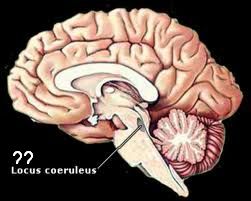 藍班
藍班
(5)
5-羥色胺(5-HT)的作用[54-56]:從背縫核發出止於杏仁核和額葉皮質的5-HT能神經通路,已被公認參與條件性恐懼,也適用於GAD模型。海馬結構屬邊緣系統,有5-HT能神經分佈,有學者認為它參與評估面臨的危險,並可啟動行為抑制環路,在GAD的發病中也起重要的作用。目前認為GAD患者可能存在5-HT能系統異常。證據有:j
GAD患者腦脊液中5-HT水準較健康人降低。k GAD患者血小板帕羅西汀結合位點減少。l
給予非特異性5-HT和5-HT2受體激動劑後GAD患者再次出現焦慮和敵對,此症狀與GAD發作時表現一致。m
5-HT受體激動劑,如丁螺環酮、5-HT1c和5-HT2受體拮抗劑對GAD患者有治療作用。根據以上研究結果,目前對5-HT能功能紊亂有以下2種理論解釋:
① 5-HT過多:GAD患者可能存在突觸間隙內5-HT釋放增加或突觸後受體過敏。此理論可解釋選擇性5-HT再攝取抑制劑(SSRI)起效的時間:最初使用SSRI引起突觸間隙內5-HT再攝取受阻,突觸間隙內5-HT水準增高,與超敏的突觸後受體作用,結果引起焦慮症狀加重;隨著作用時間的延長,受體活性逐漸降低,然後焦慮症狀緩解。這也可解釋丁螺環酮的治療作用:丁螺環酮是一種突觸前5-HT受體部分激動劑,可減少5-HT能神經元點燃,因此可減少突觸末端5-HT釋放,也可治療GAD。由此推測5-HT1C和5-HT2受體拮抗劑可減輕GAD症狀可能是由於降低突觸後受體敏感性,減少5-HT釋放。
② 5-HT缺乏:在某些大腦腦區給予5-HT可對抗焦慮,缺乏5-HT可引起焦慮症狀。提示GAD患者可能存在5-HT的耗竭。此理論可解釋SSRI治療後最初的症狀加重:SSRI與突觸前5-HT1c等受體作用,引起5-HT釋放減少,逐漸這些受體失敏,引起5-HT釋放增加,從而緩解焦慮症狀。SSRI類究竟通過上述哪些機制發揮治療GAD的作用還取決哪種機制在GAD發病占主導地位。
(6)
下丘腦-垂體-腎上腺素(HAP)軸[57-60]:應激可啟動HAP軸,引起促腎上腺皮質激素(ACTH)和皮質醇釋放增加,這是正常的應激反應。GAD患者基礎血漿ACTH水準較健康人水準高,而皮質醇水準正常;應激反應時GAD患者ACTH和皮質醇與應激前後的健康人均無顯著差異;患者地塞米松抑制試驗脫抑制率可達到38%左右。這些結果提示GAD患者存在HPA軸活動異常。張亞林等的研究顯示GAD患者組ACTH水準高於對照組,CS水準低於對照組,說明廣泛性焦慮患者存在HPA軸功能異常:在經過治療焦慮緩解後,ACTH水準下降、CS水準升高,HPA軸功能趨於正常。推測廣泛性焦慮屬慢性應激,此時CS的分泌可能接近耗竭狀態,而使ACTH水準回饋性地增高;而當焦慮症狀緩解後,CS水準恢復正常,回饋性地使ACTH釋放減少而達到正常平衡狀態。
(7)
促皮質激素釋放因子(CRF)[61]:CRF在杏仁核、藍斑和大腦皮質等與焦慮和恐懼反應有關的腦區都有表達。它可啟動藍斑並增強驚嚇反射的效應,如腦室內給予CRF可引起類似焦慮的行為和神經內分泌反應,此效應可被苯二氮平類藥物逆轉。CRF還可增強5-HT和NE等多種神經遞質的釋放。提示CRF可能直接和間接地參與GAD的發病。然而Fossy等發現GAD患者血漿CRF水準與健康人無顯著差異。CRF與GAD發病是否有關,仍有待確定。
3.2 心理因素
心理因素在焦慮症的發病中,只能作為誘發因素,無特異性。
(1)
緊張性事件[62]:有人提到廣泛性焦慮障礙的發生與緊張性事件有關,當這些社會心理問題繼續存在時,則病程遷延。我們的研究資料提示廣泛性焦慮障礙病前由精神刺激作為誘因的較驚恐發作多些。
(2) 生活事件[63, 64]:許多研究表明驚恐發作前常有生活事件,如Farevelli的研究發現驚恐發作前1年中,所經歷的生活事件數量及其評分皆高於對照組,而且許多生活事件發生於病前1個月內。他認為親友的重病和死亡給患者的驚恐,是一個重要誘因。也有相反的結果,認為患者與對照組之間發生的生活事件並無差異。
(3) 精神分析學說[65, 66]:認為兒童時期的分離性焦慮可能觸發成年的焦慮。義大利的研究報導57%的廣泛性焦慮障礙者在童年有過分離性焦慮障礙,而Ranskin等提出驚恐發作早年有分離性焦慮障礙,是導致成年驚恐發作的重要因素。
(4) 認知理論[67,
68]:提出廣泛性焦慮障礙持續存在是因為病人存在對症狀的一種錯誤的認知,如常恐畏地表示嚴重心臟疾病的心悸,預示中風的頭暈,這些恐懼導致進一步焦慮,焦慮又加重了恐懼,使疾病遷延不愈。
4、治療及預後[69-86]
目前國內外對焦慮症的治療大致包括兩部分,另一部分是心理治療,一部分是藥物治療。心理治療己被證明是有效的,且與藥物同時治療可降低復發率。心理治療方面對認知行為治療研究比較多,認知行為治療包括認知重建、放鬆治療、系統脫敏療法和社交技能訓練等。許多研究總結了認知行為治療的療效,但研究結果不一。有研究說明聯合治療比單一治療效果好。也有顯示單獨使用暴露療法在隨訪期間症狀會有某種程度的惡化,而與認知重建結合治療則使症狀的改善比較持久。
在藥物治療方面,所用藥物主要有高效苯二氮平類藥物(BZD)、三環類抗抑鬱劑(TCAs),單胺氧化酶抑制劑(MAOI)、選擇性5-羥色胺再攝取抑制劑(SSRI)、5-羥色胺受體激動劑等。
使用BZD最主要的不足是藥物依賴和戒斷症狀,對有物質濫用史、特殊人格素質如依賴,幼稚、悲觀者,禁用BZD,最好首選抗抑鬱藥物和心理治療。BZD也可導致運動和認知功能損害,特別是老年患者在聯合使用其他精神藥物時更易出現。
TCAs和MAOI治療GAD有效,但副作用大,這類藥物正在逐漸被新一代抗抑鬱藥替代,或僅作為治療GAD和其他焦慮障礙的候選藥物。第二代抗抑鬱藥主要有選擇性5-HT再攝取抑制劑(SSRI),如帕羅西汀(paroxetine)、氟西汀(fluxetine)、氟伏沙明(fluvoxamine)、西酞普蘭(citalopram)和舍曲林(sertraline);選擇性5-HT和NE再攝取抑制劑(SNRI)如萬拉法新(venlafaxine);正腎上腺素(NA)與特異性5-HT抗抑鬱藥,如米氮平,還有5-羥色胺受體激動劑
丁螺環酮等,這此藥物都有抗焦慮作用,但目前被美國FDA批准用於治療GAD的藥物只有帕羅西汀和萬拉法新緩釋劑。SSRI療效與BZD相似,但安全性和耐受性有很大改進。帕羅西汀是SSRI中唯一被美國FDA批准治療GAD的藥物。其主要副反應有噁心、性功能障礙、睡眠障礙等。萬拉法新常見的不良反應有噁心、頭暈、嗜睡、失眠、射精異常、口乾、出汗、高血壓等,一般較輕微,長期用藥明顯減輕。目前被認為是一線治療藥物。
Marks[87]對300例焦慮症患者隨訪近20年,有50%患者痊癒或好轉。焦慮症的預後主要與遺傳性素質有關,處理得當絕大多數患者在半年內好轉[88]。Noyes[89]發現1/3病例病程持續6年以上。驚恐患者死于心臟病者較常人為多。
總之,焦慮症發生的外因是各種非特異性社會心理刺激,主要為危險性威脅;內因則屬遺傳性焦慮性人格、行為模式、藍斑核-中縫核-邊緣系統功能改變。臨床主要表現屬交感機能亢進症狀和焦慮情緒。HAMA可作為焦慮症的定量診斷的指標。治療以SSRI,如帕羅西汀和萬拉法新等為一線用物,在此基礎上選擇性配合第二線藥物,如BZD、TCAs、心得安、丁螺環酮等。
二、中醫學對焦慮症的研究及治療進展
一、病因及發病機理
1 實證方面
早在《內經》中就有對本病的病因病機的描述,提出“思則氣結”、“驚則氣亂”,“驚則心無所依,慮無所定,神無所歸”,很多醫家認為焦慮症實證者基本病機為情志失調、肝氣鬱結,說明了氣機失調在本病的病機中有重要地位。肝主疏泄,喜條達,惡抑鬱,情志失調,肝氣郁滯,鬱而化熱,擾亂心神,變生煩躁不安的慢性焦慮症。孫松濤[90]認為本病多因邪入少陽,肝失疏泄,膽的決斷功能失調,氣郁失調達,鬱而化熱,擾亂心神而出現焦慮諸症。徐建國等[91]認為此病中醫辨證為情志因素致肝氣鬱結,心神失養所致。余崇華[92]認為廣泛性焦慮病機多為意欲不遂、積憂久慮致肝氣鬱結,氣鬱生痰,痰氣留滯,氣病及血,氣亂則血亂,氣鬱則血瘀,從而導致焦慮症的發生。鄒錦山[93]針對廣泛性焦慮的臨床表現提出七情內傷、氣機鬱滯的病因病機。徐文祥[94]觀察此病初起多由情志憂鬱,肝失疏泄所致,遷延日久,有餘之氣勢必化火,干擾脾運易生痰飲,火與痰結互犯心包,導致心主神明的功能紊亂。孟昭蓉等[95]根據金元時代劉完素、朱丹溪從火、從痰治療精神疾病的理論,並結合臨床實踐,總結出廣泛性焦慮多因肝氣鬱滯,氣鬱日久化火,煉液成痰,痰熱內擾所致。
老年患者因臟腑功能衰弱,對不良環境、精神刺激抵抗力弱,一旦膽腑失用、胃氣上逆,水穀不化,則痰熱內生,氣機逆亂,引起異常焦慮反應。故境遇刺激只是誘因,病本為臟腑功能異常即膽胃不和、痰熱內擾,使膽腑生髮失常,喪失中正、決斷能力[96]。邪入少陽,肝膽鬱熱,擾亂心神亦可導致本病[97].
2 虛證方面
憂思過度,可致心脾兩虛,心失所養;暗耗陰血,心肝陰血虧虛,肝失調達或肝陽偏亢,則魂無以藏,神無所附[98];肝血虧虛則膽氣亦虛,決斷失職[99];情志不遂、憂思無度,心之氣血耗傷,可致膽氣虧虛。一些醫家則認為廣泛性焦慮的基本病因病機應為臟腑的功能失調,以虛為本。閆福慶[100]認為廣泛性焦慮中醫辯證多為心肺陰虛內熱,病機為邪熱入侵,心肺陰虛,血不足,則心神失養。馮禎鈺等[101]從“心藏神、肝藏魄、腎藏志”的理論出發,認為廣泛性焦慮的發生與心、肝、腎三臟功能失調有密切關係。梁小赤等[102]認為情志過極可直接傷及內臟,影響臟腑氣機,陰血暗耗,腎水虧虛不能上濟於心,導致“心無所倚,神無所歸,慮無所定”而出現焦慮緊張、坐立不安、惶惶不可終日等症狀。黃淑貞等[103]認為廣泛性焦慮以心脾兩虛、氣血不足為主要病機,思慮憂傷過度,易勞心傷脾;大病久病,既能耗傷心血,又能影響脾之健運,最終造成心脾兩傷,氣血虛少的焦慮症。祝家勝[104]認為,廣泛焦慮症是因情志不遂,思慮過度,耗傷心血,使氣血虧損,心失所養,神失所藏,以致心神不安而成。馮靜等[105]認為腎陰虧虛與多種證型焦慮症的發生有密切關係:j
腎精不足型:恐為腎之志,若因久病失精、房勞過耗,精氣內虧,致腎志不寧則恐懼不安。k
心肝血虛型:依中醫理論,“肝腎同源”,肝腎中精血互生互化。腎陰(精)虧虛可導致肝血不足,心主血的功能又賴肝之藏血。故腎陰的虧虛可引起心、肝血虛。心血虧虛則無以養神,心主神明功能不能正常發揮則心神不寧,出現緊張、坐立不安。肝血虛則膽氣亦虛,肝不藏魂,膽失決斷,表現出恐懼緊張。l
肝陽上亢型:肝體陰而用陽。肝陽上亢多為肝陰不足,陰不制陽所致。而腎陰不足,水不涵木是引發肝之陽氣升發無制的一個重要原因,表現出情緒不穩定,易於激動。m
陰虛陽亢型:久病耗傷陰精,日久及腎,腎陰虧虛,則命門之火失制,相火亢盛,以致陰虛火動,虛煩不眠。因此,腎陰虧虛可以直接或間接導致多種證型焦慮症的發生。
3 虛實夾雜方面
較多醫家從虛實夾雜論治此病,認為焦慮症不論病初為實,病後為虛,還是本虛標實,其病因都不單純是實證或虛證。本病臨床中或因實致虛,或因虛轉實,往往虛實夾雜,肝氣鬱結,木旺乘土,造成肝鬱脾虛[100];老年脾胃虛弱,又兼憂慮損傷,運化不力,則內生痰濕積滯,虛、鬱、積滯互為因果致病。張學真[106]認為焦慮症的病機為素體陰陽不和,複加肝失疏泄、情志失調,最終導致本病發生,因此治療上主張調和肝膽、疏肝解鬱,同時調和心腎,以達到水火相濟、陰陽調和的目的。徐敏學[107]認為本病的病機為患者長期患病造成陰陽失調,其次肝氣鬱結,氣滯血瘀,致病情久治不愈,時輕時重,治療宜平衡陰陽,疏肝解瘀,破氣導痰,從而使氣平脈通,情志平和而達到治療目的。黃躍東[108]認為焦慮症病位主要在心與肝,焦慮日久,多暗耗陰血,致血行不暢,主張治療焦慮症應從心肝論治,以養心安神、重鎮安神、疏肝解鬱、活血通脈為主要治則。馮輝[109]認為本病初期為情志所傷,肝失疏泄調達,氣機失調,氣分鬱結或化火夾痰,心失所養而成,多屬實證;病久則由氣及血,引起心肝俱虧,陰虛火旺,火鬱傷神,心失所養,多屬虛證。李建梅[110]等認為本病的外在因素為情志不暢,內在因素為心、肝、脾功能失調,證屬虛實夾雜,需疏肝解鬱,調和氣血,調整臟腑機能。唐啟盛等[96]認為生理情況下,腎主藏精,主骨生髓,上充於腦,肝主疏泄,參與情緒調節;病理情況下,恐則傷腎,怒則傷肝,肝腎同居下焦,肝木需賴腎水之濡養,腎精不足,則肝失滋養,氣機疏泄失調,過度不良刺激亦往往造成肝氣郁滯,鬱久化熱,上擾神明而發為本病。遲延威[111]認為思傷脾思慮過度是主要發病原因,脾氣虛,則脾主運化的功能失常,連動引發肝氣不疏,心失所養。
二、焦慮症的病證分型及中藥治療
許多醫家以中醫理論為指導,探討廣泛性焦慮的辨證分型規律,針對不同的證型給予相應的治療,從而達到提高臨床療效的目的。隨著病程進展,疾病會出現各種證的變化,辨證就是要揭示疾病發展過程中某一時刻本質的病理變化,它是一個動態的觀念。中醫認為廣泛性焦慮臨床有多種證型。郭蓉娟等[112]認為廣泛性焦慮的中醫證型涉及範圍有:①氣鬱化火型②心脾兩虛型③肝陰虧虛型④肝氣鬱結型⑤心膽氣虛型⑥血行鬱滯型⑦痰氣鬱結型,其中以氣鬱化火型為常見,故臨床主要以疏肝泄火、養血安神法治療本病。石向東[113]根據患者症狀辨證施治,將廣泛性焦慮分為:①心脾兩虛型,方用歸脾湯加減。②肝陽上亢型,方用杞菊地黃丸加味。③肝氣鬱結型,方用柴胡疏肝散加減。④心腎兩虛型,方用六味地黃丸加減。經臨床驗證,療效滿意。沈潔等根據《中醫診斷學》中的八綱辨證、氣血津液辨證、臟腑辨證所擬定的辨證要點,結合人群體質特點對焦慮症進行分型,①肝鬱痰阻型:咽中不適、甚至有梗阻感,口中黏膩、胸中窒悶、舌苔白膩、脈弦滑或細滑;
②心脾兩虛型:神倦、食少、面色少華、心悸不寐、舌質淡邊有齒痕、脈細;
③肝鬱氣滯型:精神抑鬱、情緒不寧、胸悶、胸脅脹痛、痛無定處、噯氣、舌苔薄白、脈弦。張麗[114]在臨床實踐中將本病分為3個證型進行辨證治療:①心虛膽怯型,證見心悸不寧、焦慮煩躁、善驚易恐、稍驚即發、坐臥不安、惡聞聲響、失眠多夢、注意力不集中、記憶力減退、氣短、自汗、舌質淡紅、苔薄白、脈細弦,本型治宜鎮驚定志,養心安神,方用安神定志丸加減。②肝氣鬱結型,證見焦慮不安、心煩易怒、脘腹不適、痞塞滿悶、喛氣歎息、噁心納差、大便不調、舌質淡紅、苔薄膩、脈弦數、治宜疏肝解鬱、理氣暢中,方用柴胡疏肝散加減。③陰虛火旺型,證見情緒焦慮、緊張不安、急躁易怒、手足抖動、肢體麻木、時有驚恐發作、精神疲憊、眩暈耳鳴、失眠健忘、五心煩熱、咽幹口燥、潮熱盜汗、面色潮紅、舌紅少苔、脈細數。治宜滋陰降火,定志安神,方用二陰煎加減,療效滿意。胡健琴等按病程將本病分為6型。①肝氣鬱結型:證見情緒不寧,精神抑鬱,善太息,脅肋脹痛,痛無定處,腹脹納差,咽中不適,如有梗阻感,舌淡紅,苔薄白,脈弦。治以疏肝理氣,用柴胡疏肝散加減;②氣鬱化火型:證見心悸、失眠、煩躁急怒,口苦咽幹,小便黃赤,大便秘結,舌紅,苔黃,脈弦數。治以疏肝瀉火,佐以安神,用丹梔逍遙散加減;③心神不寧型:證見心悸善驚易怒,坐臥不安,心煩失眠,雙手震顫,舌淡紅,太薄白,脈細。治以震靜安神,養心定志,用平補鎮心丹加減;④痰熱上擾型:證見心煩易怒,心悸,驚惕不安,痰多,泛惡,少寐多夢,胸脅痞滿,口苦,舌紅苔黃膩,脈滑數。治以化痰清熱,和中安神,用溫膽湯加減;⑤心脾兩虛型:證見多思善慮,心悸膽怯,惴惴不安,健忘,多夢,頭暈,神疲,面色無華,食欲不振,舌紅,脈細弱。治以健脾養心,益氣補血安神,用歸脾湯加減;⑥陰虛火旺型:證見心悸不安,心煩少寐,頭暈耳鳴,健忘,腰膝酸軟,五心煩熱,口乾少津,舌質紅,脈細數。治以滋陰清熱,養心安神,用天王補心丹合黃連阿膠湯加減。
另有許多醫家根據各自的臨床經驗在治療此病時各有側重。各醫家對中醫傳統醫學的理論、方劑及藥物均有不同的理解和認識,因此在臨證治療時,分別形成了各自的診療特色。他們大多針對主要病機,確定治法及基本方,再隨證加減。
從少陽肝膽論治:孫松濤[90]認為焦慮症作為情志障礙,與肝膽的生理功能失調密切相關,多由邪熱侵犯少陽所致,故臨床應以和解少陽、疏散氣機鬱滯、清熱鎮驚為法,採用柴胡加龍骨牡蠣湯加減治療廣泛性焦慮症患者72例,痊癒49例,顯效13例,有效7例,無效3例,總有效率95.83%,表明本方具有良好的抗焦慮作用,副作用少,隨證加減,療效滿意。余崇華[92]亦主張從少陽論治,應用柴胡加龍骨牡蠣湯加減治療廣泛性焦慮症患者52例,所用方劑在和解少陽、清熱鎮驚的基礎上,兼具活血祛瘀之功,結果顯效36例,有效13例,稍有效2例,無變化或惡化1例,總有效率98%,顯著高於西藥對照組。又如周仁義等[115]採用出自《千金方》之溫膽湯治療廣泛性焦慮症患者52例,《醫宗金鑒》中記載:溫膽湯治“熱嘔吐苦,虛煩,驚悸不眠,痰氣上逆”,經臨床驗證,治療邪入少陽肝膽,鬱而化熱,煉液為痰,痰熱上擾神明所致的廣泛性焦慮取得較好療效,痊癒37例,顯效10例,有效3例,無效2例,總有效率96.2%。從心神不寧論治:李軍豔等[116]認為廣泛性焦慮屬於中醫“心神不寧”的範疇,故從調神角度辨治,以酸棗仁為君藥,配伍川芎、知母、茯苓、甘草組方,在治法上體現了肝脾腎同調的特點,具有養血疏肝、清熱養陰、健脾寧心之功效,隨患者兼見症進行加減,臨床治療廣泛性焦慮症患者15例,治療4周後,總有效率與氯硝西泮組無明顯差異,不良反應少於氯硝西泮組。鄒錦山[93]臨床治療廣泛性焦慮症患者36例,採用酸棗仁湯為基礎方,以清心除煩、寧心安神為主,與西藥多塞平療效相當,但患者無依賴性,服藥依從性好,優於西藥對照組。尉志軍[117]治療本病患者36例,所使用的平慮湯也是以酸棗仁湯為基礎方進行化裁,有滋陰降火、清膽寧神之功,諸藥合用,使心膽氣和,心神安寧,治癒24例,顯效7例,有效3例,無效2例,總有效率達到94.45%。從心肝論治:黃躍東[108]認為焦慮症病位主要在心、肝,焦慮日久,多暗耗陰血,致血行不暢,因而主張治療焦慮症應從心肝論治,法以養心安神、重鎮安神、疏肝解鬱的同時,隨證配合活血化瘀,突出改善睡眠的意義,方選血府逐瘀湯加減,臨床治療效果顯著。
從心脾論治:遲延威[111]認為平時思慮過度是本病的主要發病原因,應用柴胡疏肝湯解決激發期時的症狀,後期則以補脾益氣鎮定安神加以治療,治療效果滿意,隨訪復發少。從心肺陰虛論治:閆福慶[100]臨床上選取52例廣泛性焦慮症患者,應用百合地黃湯治療廣泛性焦慮引起的一系列精神失調症候群,達到養陰清熱安神的效果,痊癒43例,顯效8例,有效0例,無效1例,隨訪半年,復發率為9.62%。從心腎不交論治:梁小赤等[102]以《傷寒論》中黃連阿膠湯為主化裁治療陰虛火旺、心腎不交的廣泛性焦慮症患者30例,諸藥合用,共達滋陰降火、水火相濟、鎮驚安神之功,使神自安,焦慮自止,驗證了黃連阿膠湯對治療陰虛火旺型的廣泛性焦慮有確切療效,且在中後期的作用較西藥對照組持久而穩定。
從肝腎論治:唐啟盛等[96]以清肝補腎法治療不同程度的廣泛性焦慮症患者85例,其中輕度36例,中度33例,重度16例,予自擬的清肝滋腎安神湯治療6周後,總顯效率為88.2%,其中對輕度焦慮者顯效率為94.4%,對中度焦慮者顯效率為87.9%,對重度焦慮者顯效率為75%,表明清肝補腎法治療本病療效良好。
從心肝腎三臟功能失調論治:“心藏神、肝藏魄、腎藏志”,當心肝腎三臟功能失調時,即可出現焦慮諸症。馮禎鈺等[101]治療廣泛性焦慮症患者118例,給予重鎮安神、理氣解郁、寧心化痰、益腎定志的磁珠安神湯進行治療,治癒49例,顯效33例,有效24例,無效12例,總有效率達到89.8%,療效明顯優於多慮平對照組。
各醫家或根據患者症狀運用經方加減,或根據臨床經驗自擬組方,利用中藥湯劑治療廣泛性焦慮。除此以外,臨床還有醫家採用其他中藥製劑治療此病:徐建國等[91]採用現代新型抗抑鬱中藥解鬱丸治療廣泛性焦慮症患者60例,此藥系由古方“逍遙散”和“甘麥大棗湯”化裁而來,通過6周的開放性對照研究後發現,解郁丸與阿普唑侖療效相當,用藥兩周後即顯示出明顯的療效,且副作用較阿普唑侖輕微。郭秀英等[118]臨床應用琦雲樂片治療廣泛性焦慮症患者30例,總有效率90%,與蘿拉西泮對照組的總有效率86.7%相似,證明琦雲安樂片治療廣泛性焦慮有效,副反應輕微。黃飛姻[119]使用刺五加注射液治療此病,選取廣泛性焦慮症患者45例,治療4周後,痊癒23例,顯效15例,進步5例,無效2例,總有效率95.6%,較西藥對照組抗焦慮作用強,起效快,並且分析了藥物的作用機制可能是刺五加含有異秦皮啶、異秦皮啶甙、丁香甙、胡蘿蔔甙等成分,對中樞神經系統有興奮和抑制的雙向調節功能。唐啟盛等[96,
97]經調查發現抑鬱、焦慮症狀在恢復期SARS患者中普遍存在,抑鬱高達63%以上,焦慮高達98%。他們採用中西醫結合治療,應用中藥刺五加製劑,用於60例小湯山醫院的恢復期SARS患者的心境障礙治療,取得了滿意的療效。他們認為該期患者中氣虛、濕濁、血瘀者偏多,而該藥具有補氣、活血、利水等功能,能夠調節免疫、提高人體應激能力、調節自律神經和血管功能,故此時採用此類藥物可起到兼顧各方面的治療作用。
三、焦慮症的非藥物治療
各醫家以中醫傳統醫學理論為指導,採用諸多有效的方劑治療焦慮症取得了一定的成果,除此以外,許多非藥物療法亦有不可忽視的作用[120]。這方面已有一些臨床報導,但仍屬探試性階段,其現代醫學機理尚不清楚。
1傳統針刺療法
針刺治療精神病,在我國歷史悠久,早在《靈樞》就論及治療精神病的經絡,黃甫謐的《針灸甲乙經》介紹了有關精神病的穴位85個,孫思邈提出13鬼穴為治療各種精神病之要穴,目前針刺在臨床上運用也較為廣泛。傳統針刺療法即在中醫理論指導下,將毫針、耳針等針具刺入腧穴或特定的部位後,運用徐疾、迎隨、呼吸、開闔、提插、撚轉等單式補瀉,或燒山火透天涼等複式補瀉,或補瀉兼施,或平補平瀉等手法刺激腧穴以防治疾病的方法[120]。路明[121]採用針刺治療焦慮症80例,以通調任督、安神定志為治則,總有效率達到86%,取得較好的療效。鄭祖豔等[122]認為情志之傷,無不從心而發所以治療焦慮症應當從心論治。而背俞穴是臟腑精氣轉輸於背的部位,也是督脈之氣通過足太陽膀胱經並輸於內臟的部位,故選取心俞、厥陰俞、神門、內關四穴配合,並調節陽脈之海的督脈之經氣,治療本病極其有效。喬岩岩[123]認為焦慮症的病因病機主要是由於七情及稟賦因素等原因損傷心肝腎三臟,造成情志活動失調,臨床用手少陰心經的原穴神門穴透刺手少陰心經之合穴少海穴治療本病,取得良好療效。臨床上應用傳統針刺療法的同時,常配合其他療法,如灸法、穴位注射、經絡氧療法等治療本病。高莉萍等[124]臨床選取百會、神庭、四神聰、安眠、內20中醫藥治療焦慮症的研究進展關(雙)、神門(雙)、照海(雙)、申脈(雙)諸穴,並隨證選穴配合灸法治療焦慮症,共奏鎮靜寧心、補益脾腎、安神清腦之效,療效滿意。張洪等[125]認為焦慮症多由鬱火、痰熱上擾神明或心、肝、腎虧所致,故選取百會、內關、人中、三陰交等穴及四神聰、本神、神庭、神堂、身柱等安神定志之穴,採用醒腦開竅法進行針刺,並根據患者症狀,選用相應背俞穴注射天麻注射液或當歸注射液進行穴位注射治療,臨床療效較好,尤適用於不能服用藥物治療的患者。趙天輝等[126]採用平補平瀉法針刺內關、足三里兩穴,同時配合鼻塞吸氧30分鐘以達到補益氣血、溫陽解郁、鎮靜安神、滋補肝腎之效。經臨床觀察,經絡氧療法治療焦慮症療效顯著,未發現不良反應。
現在用於治療焦慮症的穴位分佈規律主要為: ①督脈主穴。②多穴位:多為頭面、四肢。③對症取穴:根據循經取穴原理,綜合對症取穴。
2電針療法
與傳統針刺方法相比,電針療法可以根據治療需要,準確、連續地調整刺激量,從而提高療效[120]。郭乃琴等[127]認為焦慮症的臨床表現多與督脈經氣運行不暢有關,故選用督脈百會、印堂等穴,以調節督脈經氣;心主神明,故選用心俞、肝俞、脾俞、腎俞、印堂、內關、神門等,以調節臟腑之氣,採用針刺加電針的方法治療焦慮症,全面調整人體臟腑及經絡的機能,臨床上取得了滿意的療效。黃學軍等用電針治療焦慮症,穴選神門、百會、三陰交、足三里、大椎為主穴,並隨證進行配穴取得較好療效,海日罕等[128]針對26例青年女性廣泛性焦慮障礙患者,取百會、上星、內關、神門、足三里、三陰交、太沖穴,行電針治療,有效率達80.8%,郭雅明等[129]認為,運用西藥治療焦慮症療效尚可,但停藥易復發,需長期服藥,且有依賴性及其它不良反應;運用中藥見效較慢,不利於急性發作的治療,經他們臨床實踐發現經絡氧加電針治療焦慮症有較好的療效,且起效快,症狀不易反跳,無須長期治療,副反應輕微,患者易於接受治療。
電針療法大體分為體針電針、體針加耳針通電針和電針衝擊療法。電針具有刺激時間長,刺激量可人為控制大小、安全的特點,而且不會象抗焦慮藥物那樣形成依賴,無副作用,可減輕病人對服藥的心理負擔,從許多臨床報導看,療效指數方面針刺優於多慮平。
3音樂電針療法
音樂電針療法是現代電子技術與傳統針灸相結合的新療法。張洪等[125]臨床應用ML8806型音樂電針儀治療焦慮症,選取風池、百會、印堂、太陽、神門諸穴為主穴,用平穩、柔和的醫用音樂波刺激調整督脈,疏通經絡,調和氣血,調整大腦情感區,解除患者的焦慮症狀,使其陰平陽秘,精神乃治,從而恢復健康。此法療效與抗焦慮藥多慮平可相媲美,且基本沒有副作用,因此法無需扎針,還可以消除電針及傳統針灸帶給患者的痛苦與恐懼感,又可以防止交叉感染[120]。
4灸法治療
單純運用灸法治療焦慮症較少,但李國臣等以單灸鬼哭穴來治療慢性焦慮症,收效甚好。而且鬼哭穴取穴方便,施術時短,更易操作。對於不願接受針刺治療者此法更易使病人放鬆,有助於病情康復。
5耳穴貼壓療法
耳穴貼壓療法簡稱耳壓法,是在耳針治療基礎上發展起來的一種新的治療方法。《靈樞》曰:“耳為綜脈之所聚”,霍小寧等[130]尊此說,取耳穴神門、心穴、皮質下三穴合用,共奏鎮靜安神之功,療效顯著。
6穴位按摩療法
褚慶偉等[131]根據中醫理論,合理選擇調節氣機、疏通經絡、寧心安神、調理脾胃、調節經氣的九處穴位,採用穴位按摩治療高三學生考試焦慮症,結果表明,穴位按摩對緩解、減輕和治療考試焦慮的基本症狀效果顯著,且具有較強的可行性。
7情志相勝法
中國古代醫家認為“七情”是致病的重要機理,從而在七情理論基礎上獨創了情志相勝療法。它是按五行相克的規律,採用一種情志克制另一種過亢的情志。《素問•陰陽應象大論》:“怒傷肝,悲勝怒;喜傷心,恐勝喜;思傷脾,怒勝思;憂傷肺,喜勝憂;恐傷腎,思勝恐。”臨床上可用憤怒之法治療因思慮過度損傷脾土的不能食、不寐、鬱證等疾患[132]。《儒門事親》載有:“一富家婦人,傷思慮過甚,二年不寐,無藥可療。其夫求戴人治之。”張氏分析病情後,“乃與其夫以怒而激之。多取其財,飲酒數日,不處一法而去,其人大怒汗出,是夜困眠,如此者,八九日不寤,自是而食進,脈得其平。”張氏認為,該患者之不寐是因日久思慮傷脾,陰血不和所致,遂依五行學說木克脾土之理,運用心理療法有意激怒患者,使汗隨怒出,不用針藥而治癒了多年的不寐。[133]
8移情易性法
《臨證指南醫案》云“情志之鬱,由於隱情曲意不伸,蓋郁證全在病者能移情易性。”分散病人對失眠的注意力,將思想焦點能從病所引發的心理障礙轉移於他處;或改變其生活環境,不與不良刺激因素接觸,消除病人內心的雜念,改變其錯誤的認識和情緒。具體方法有很多,如琴棋書畫等。吳師機《理淪駢文》云“七情之病者,看書解悶,聽曲消愁,有勝於服藥者矣”。[134]
9 氣功導引法
氣功導引是一種調身,調呼吸的形式,調節心理,精神內守,達到修身養性,祛除疾病的方法。《靈樞•官能篇》云“緩節柔筋而心和調者,可使導引行氣”,主要“調心、調息、調身”來達到“精神內守、病安從來”的目的。調身是使身體各關節和肌肉放鬆,調息是調整呼吸,調心是以心行氣,以意領氣,寧神定志。這種方法可以使患者緊張焦慮的情緒放鬆,心情平靜下來,與現代醫學的生物回饋療法和放鬆療法相似。[135]
10 語言開導法
主要是有意識地運用正常言行治療病人隱性的精神創傷(即內在情態變化),如自卑、羞愧、悔恨、絕望、孤僻、厭世等等,通過言語開導,改變患者偏執的觀點,或糾正其錯誤的認知,以調整患者不平衡的心理狀態。以達到和其志意,定其心向,調動病人遂情適性、治療“心疾”的積極性。如《內經》云:“精神不進,志意不治,故病不可愈”。主張對病人“告之以其敗,語之以其善,導之以其所便,開之以其所苦”。[135]
11 暗示開導法
由於某種原因而心理受刺激,久而久之總覺這種原因仍然存在於自己的意識之中,而心理不得安寧,如“杯弓蛇影”的故事即是指此。對這種病人可採用暗示療法,就是把某種觀念暗示給病人,使這個觀念在病人的意識中發生作用。暗示開導中還包括開導式的解釋、說服法,意思是要利用病人求生的欲望對病人進行說服開導,明確告訴他們服從醫囑治療與戰勝疾病的利害關係。誘導病人創造適應治癒疾病所需要的條件,以便同醫生合作,而治癒疾病。[136]
12 藥膳食療
中醫學認為“藥食同源”“醫食同源”,藥膳是食物和藥物在中醫學理論指導下的有機結合,對人體同樣有治療作用。劉澤萱等用百合蓮棗甘草粥治療臟躁32例,藥膳組成:鮮百合40g,幹蓮子30g,大棗10枚,炙甘草5g,粳米60g。此為1劑。1劑/d
,早晚分服,溫熱食之,1個月為1個療程。痊癒3例,占9%;顯效10例,占31%;有效13例,占41
%;無效6例,占19%;總有效率為81%。有人[137]認為甘麥大棗湯,即小麥50g ,大棗12 枚,甘草10g
,大棗去核,水煎取汁代茶飲,每日1劑,有養心安神之功效。駱氏認為大棗茯神粥,即大棗14枚,茯神15g,粟米60g。將茯神、粟米細銼,先用水1000ml,煮至500ml
,溫熱食用,可以治療脾虛氣弱,心神不寧,夜寐不寧,失眠多夢等。
需要注意的是,對於焦慮症無論用藥物療法還是用非藥物療法均應與心理
疏導相結合。《內經》云:“告之以其敗,語之以其善,導之以其便,開之以其
苦。”在治療前,醫生應耐心地向患者說明疾病的性質,解除患者對焦慮症所
產生的種種精神負擔和恐懼心理,培養患者積極樂觀向上的生活情趣,幫助他
們樹立戰勝疾病的信心,在心理、生活上給以關懷和幫助,鼓勵患者多參加社
會活動,以替換不良的情緒困擾,從而得到相得益彰的療效。
總體上,目前中醫治療焦慮症主要有藥物治療、心理療法、針灸療法等多種形式。中藥治療有疏肝柔肝,清泄鬱熱,化痰開竅,鎮靜安神,滋補陰液等不同治法,常用方有逍遙散、黃連溫膽湯、甘麥大棗湯等。心理療法主要有情志相勝法、移情易性法等。目前存在的問題主要是:1、病名確定有待完善,診斷及辨證分型、療效評定標準尚不統一;2、不少臨床研究缺乏嚴格對照,結果未經統計學處理;3、對焦慮症病因病機的研究還需進一步深入;4、心理療法的臨床研究及規範化還需進一步深入。
未完待續
A study on the anxiety of modern medicine
1, the concept of anxiety disorders
Anxiety disorders [37] (Anxiety Disorder), known as anxiety neurosis. It
characterized by anxiety, tension, fear, mood disorders, autonomic nervous
system symptoms associated with anxiety and other symptoms and movement
characteristics. Anxiety is not due to an actual threat, and the degree of
panic is not commensurate with the reality of the situation.
Clinically, it is divided into generalized anxiety disorder and panic
attacks. [38]
In United States in addition to the above two types of nervous disorders, it
includes phobia, obsessive-compulsive personality disorder and post trauma
disorder.
English textbooks [39] classify panic attacks as panic obstacles.
In this study, the research for this project only deal with generalized
anxiety disorder.
Clinical manifestations of anxiety disorders include the following three
conditions:
(1) the situation does not commensurate with nervousness, fear, panic mood.
(2) psychomotor unrest.
(3) associated with physical discomfort of the autonomic nervous system
dysfunction.
Generalized Anxiety Disorder (GAD) mainly for
the possible future, a threat that does not exist objectively or danger or
fear, and fear of unfortunate events. Some patients can not be clearly
realized that he feared objects or content, but rather a nervous, anxious;
and
some patients are often worried it may be some non-real threat, or
unfortunate events in life that may occur, such as worry about and relatives
may get into accidents. The degree of anxiety and worry does not
commensurate with reality. Patients often panic feeling, all day upset,
restless, worried, it seems unfortunate coming. Difficulty concentrating,
memory loss, lack of interest in things around. Appearance often display
face anxiety, frown, tense posture; some showed hand-wringing in the corner,
back and forth, nervous, eyelids, facial muscles or finger tremor. Often
accompanied by autonomic nervous system hyperactivity symptoms, such as
palpitations, chest tightness, shortness of breath, sweating, dry mouth,
upset stomach, nausea, abdominal pain, diarrhea, frequent urination,
impotence, premature ejaculation, menstrual disorders, lack of music,
dizziness, headache, muscle aches and fatigue. Sleep disorders manifested as
difficulty falling asleep and easily awakened. Checks can be found limb
tremor, brisk tendon reflexes, dilated pupils, tachycardia and other signs.
The symptoms fluctuate in the course of disorder.
2, epidemiological studies [40-46]
In the United States, the prevalence of anxiety disorders is quite
controversial. In the general population anxiety disorder is
about 2 to 4%
has been reported. Kaplin (1996) according to DSM-III-R diagnostic
criteria for classification, the estimated lifetime prevalence rate of 10 to
15%. Weissman (1998) report on the course of generalized anxiety disorder in
a month to a year, the prevalence rate is 2.5 to 6.4 percent, while the panic
disorder is 0.4 to 1.2 percent. English textbooks prevalence of generalized
anxiety disorder reported 25 to 64 percent, while the six-month panic
disorder found a prevalence of 6-10%. Description foreign anxiety disorders
were more common, but more women than men, male to female ratio is about 2:
1, age of onset is between 20 to 40 years old. According to epidemiological
survey of 12 regions of neurosis found a prevalence of 1.84% of anxiety
disorders. With the accelerated pace of modern life, the fierce competition
in the market economy, people are having increasingly greater psychological
pressure, and the patients have increased year by year, a upward trend.
Currently, the global neuropsychiatric disorders and mental disorders
account for more than 1% of the population, according to the WHO report: in
2007 the incidence of neuropsychiatric disorders share of global operations
due to illness and disability and loss of 12% of the production capacity of
the population, including high-income countries accounted for 23%. It is
predicted that the world neuropsychiatric disorders will rise in global
disease spectrum in to second place, behind ischemic heart disease. With the
accelerated pace of life in modern society, work, relationships, increased
economic pressure, anxiety is the most common emotional reaction, but also
various types of central symptom of neurosis, Murry had predicted, GAD will
be affected in 2020 DALYs (Disability Adjusted Life Years, DALY), one of the
major diseases.
3, the etiology and pathogenesis
3.1. The biological factors
(1) genetic factors [47, 48]: generalized anxiety disorder in their
first-degree relatives did not increase the incidence of chances, but Sleter
et al (1969) found that generalized anxiety disorder in monozygotic twin
studies with the disease was 41% and dizygotic twins, compared with 4%,
these are indications of the role of genetic factors in the pathogenesis of
anxiety disorders.
(2) lactate hypothesis [49]: It was found that patients with anxiety after
exercise blood lactate higher than the control group. Our data found that
the mean anxiety disorder patients blood lactate were significantly higher
than the control group, but there was no significant difference between
generalized anxiety disorder and panic attacks. Many studies suggest that
elevated blood lactate concentration and panic attacks are related, such as L-
lactate injections to patients and in the majority of patients can be induced panic
attacks. Moreover, it has been reported with imipramine in the treatment of
panic attacks is due to blocking the role of lactate. Lactate-induced
panic attack mechanism injected into the body is due to lactate,
decomposition of bicarbonate, and bicarbonate and quickly decomposed into
carbon dioxide, which can quickly through the blood brain barrier, so that
the local concentration of carbon dioxide increases, triggering carbon
dioxide receptors, so that patients excessive oxygen exchange.
(3) γ- aminobutyric acid (GABA) / benzodiazepine calm body [50, 51]: GABA is
the major inhibitory neurotransmitter in the brain, GABA neurons are widely
distributed in the central nervous system, GABA and benzodiazepines Ping has
a close structural and functional links, known as GABA / benzodiazepine calm
fit. Clinical studies have found Benzodiazepine can effectively control the
symptoms of anxiety, suggesting that there may GABA / benzodiazepine
leveling system defect in patients with GAD. Mainly as benzodiazepines
receptor function decline, which may involve the following three aspects:
reducing the outer peripheral benzodiazepine binding site level j platelets
and lymphocytes. k central benzodiazepine receptor sensitivity lower level
classes. l within the left cerebral benzodiazepine receptor distribution
level is inconsistent, significantly reducing the number of leaves
benzodiazepine receptor level, especially in the left temporal.
(4) norepinephrine hypothesis [52, 53]: When patients with anxiety disorders
have increased noradrenergic activity, Bullenger found that anxiety,
cerebrospinal fluid norepinephrine metabolite 3-methoxy-4-hydroxy benzene
glycol (MHPG) increase was found in the urine of patients with panic attacks
and their MHPG levels are higher than that of the control group. Norepinephrine receptor level is
adjusted by the cell body locus coeruleus and α 2 autologous, locus
coeruleus noradrenergic region is more content site neurons stimulate monkey
locus coeruleus, can produce similar monkey startle response. Some data
suggest that imipramine in the treatment of panic attacks effectively,
possibly reducing the locus coeruleus neurons impulses payment. Also
autologous receptor α 2 inhibition, when norepinephrine content increases,
stimulating the receptors, inhibit norepinephrine metabolism, reduce
norepinephrine. Yohimbine is a presynaptic α 2 receptor antagonists, which
block the effect of its suppression i.e., so noradrenergic activity increase
caused anxiety. And Clonidine is the receptor agonist, its suppression
enhancements. When anxiety is over the MHPG declines. This shows the role of norepinephrine in the pathogenesis of anxiety.
(5) serotonin (5-HT) role [54-56]: From the back seam issued a stop at the
amygdala and prefrontal cortex 5-HT nerve pathways, has been recognized to
participate in conditioned fear, but also for in GAD model. Hippocampal
formation belongs to the limbic system, there can be 5-HT innervation, some
scholars believe that it is involved in risk assessment faced behavioral
inhibition and start the loop, but also plays an important role in the
pathogenesis of GAD. GAD patients may exist now that 5-HT abnormalities can.
Evidence: j GAD patients with cerebrospinal fluid 5-HT levels lower than the
healthy people. k GAD patients with platelet paroxetine binding sites
reduced. l give non-specific 5-HT and 5-HT2 receptors agonist GAD patient
anxiety and hostility again, when this performance is consistent with GAD
symptom onset. m 5-HT receptor agonists, such as buspirone, 5-HT1c and 5-HT2
receptor antagonist for the treatment of patients with GAD. Based on the
above findings, the current 5-HT dysfunction can have two kinds of theories
to explain the following:
① 5-HT too: GAD patients may exist within the synaptic cleft after allergy
receptor 5-HT release increases or synapses. This theory can explain the
selective 5-HT reuptake inhibitor (SSRI) onset time: initially used SSRI
caused synaptic 5-HT reuptake gap blocked 5-HT in the synaptic cleft level
increased, and hypersensitivity postsynaptic receptors, the results lead to
anxiety symptoms get worse; with prolonged duration of action and receptor
activity decreased, then the anxiety symptoms. This may also explain
buspirone treatment effect: Buspirone is a former synaptic 5-HT receptor
partial agonists can reduce the 5-HT neurons ignite, thus reducing the
release of 5-HT synaptic terminals also treat GAD. Which indicated that
5-HT1C and 5-HT2 receptor antagonist can reduce symptoms of GAD may be due
to reduced postsynaptic receptor sensitivity, reduce 5-HT release.
② 5-HT deficiency: in some brain regions of the brain 5-HT can be given
anti-anxiety, lack of 5-HT can cause anxiety symptoms. Suggesting that there
may depletion of 5-HT in patients with GAD. This theory can explain SSRI
treatment after the initial symptoms worse: SSRI and presynaptic receptors
5-HT1c etc., causing the release of 5-HT decreased gradually desensitization
of these receptors, causing an increase in 5-HT release to relieve anxiety .
SSRI class action mechanism to play exactly what the above treatment of GAD
GAD also depends on what kind of mechanism in the pathogenesis of dominant.
(6) the hypothalamic - pituitary - adrenaline (HAP) axis [57-60]: Stress can
start HAP axis, causing the adrenocorticotropic hormone (ACTH) and cortisol
increased release, this is a normal stress response. GAD patients with basal
plasma ACTH levels were relatively high standard of health, and cortisol
levels to normal; GAD ACTH no significant difference in per capita health
cortisol and stress in patients before and after the stress response;
dexamethasone suppression test in patients with disinhibition rate up 38% or
so. These results suggest that patients with GAD abnormal HPA axis activity.
Zhang Yalin and other studies have shown that patients with GAD group ACTH
level was higher, CS level lower than the control group, indicating that
patients with generalized anxiety HPA axis dysfunction: in remission after
treatment of anxiety, ACTH levels decline, CS level rise, HPA axis become
normal. Generalized anxiety disorder is a chronic stress speculate at this
time may be close to exhaustion secretion CS state, leaving the back of ACTH
levels to increase; and when the anxiety symptoms, CS levels back to normal,
back manner so that the release of ACTH reduced to normal equilibrium.
(7) corticotropin-releasing factor (CRF) [61]: CRF are expressed in the
amygdala, locus coeruleus, and the cerebral cortex, such as anxiety and fear
responses related brain regions. It can start the locus coeruleus and
enhanced startle reflex effects, such as intraventricular administration of
CRF can cause behavioral and neuroendocrine responses similar to anxiety,
this effect can be reversed Benzodiazepine. CRF also enhance the release of
5-HT and NE, and other neurotransmitters. Tips may be directly and
indirectly involved in the pathogenesis of GAD CRF. However Fossy found that
GAD CRF levels in plasma of patients with no significant differences between
healthy people. Whether the incidence of CRF and GAD, remains to be
determined.
3.2 psychological factors
Psychological factors in the pathogenesis of anxiety disorders, and only as
a predisposing factor, non-specific.
(1) intense events [62]: It was mentioned that the incidence of generalized
anxiety disorder and tension of events, when these social psychological
problem persists, the prolonged course. Our data suggest that generalized
anxiety disorder before the disease by mental stimulation as an incentive
more than a panic attack.
(2) life events [63, 64]: Many studies have shown that panic attacks are
often former life events, such as Farevelli study found that panic attacks a
year ago, the number of life events experienced by their scores are higher,
and many life events occurred within a month before the disease. He believes
that seriously ill patients of panic and death to relatives, is an important
incentive. Have the opposite result that there is no difference between life
events and the control group of patients.
(3) psychoanalytic theory [65, 66]: that the separation anxiety in childhood
may trigger adult anxiety. Italian study reported 57 percent of generalized
anxiety disorder in childhood had separation anxiety disorder, panic attacks
and put forward early Ranskin have separation anxiety disorder, is an
important factor leading to adult panic attack.
(4) cognitive theory [67, 68]: proposed generalized anxiety disorder
persists is because there is a wrong perception of the patient's symptoms,
as usual 恐畏 expressed serious heart disease, heart palpitations, dizziness
predict stroke, these fears lead to further anxiety, anxiety has increased
the fear of the disease delayed healing.
4, treatment and prognosis [69-86]
At present, the treatment of anxiety disorders and abroad generally consists
of two parts, the other part is psychotherapy, part drug treatment.
Psychotherapy has been shown to be effective, and at the same time with the
drug therapy reduces the recurrence rate. Psychological aspects of cognitive
behavioral therapy for the treatment of more research, cognitive behavioral
therapy, including cognitive restructuring, relaxation therapy, systematic
desensitization therapy and social skills training. Many studies have
summarized the efficacy of cognitive-behavioral therapy, but the results
were mixed. Studies have described the combination therapy is better than a
single treatment. Also show some degree alone will worsen the symptoms of
exposure therapy during follow-up, combined with the cognitive restructuring
therapy makes more durable improvement in symptoms.
In terms of medication, the use of drugs are effective Benzodiazepine (BZD),
tricyclic antidepressants (TCAs), monoamine oxidase inhibitors (MAOI), a
selective serotonin reuptake inhibitor (SSRI), serotonin receptor agonists
and the like.
The main drawback is the use of BZD drug dependence and withdrawal symptoms,
substance abuse history, special personality qualities such as dependent,
childish, pessimist, disable BZD, the best choice for antidepressants and
psychotherapy. BZD can also lead to motor and cognitive impairment,
especially in elderly patients in the combined use of other psychotropic
drugs are more vulnerable.
TCAs and GAD MAOI therapy effective, but side effects, these drugs are
gradually being replaced next-generation antidepressants, or only as a
treatment for GAD and other anxiety disorders drug candidates. The
second-generation antidepressants are mainly selective 5-HT reuptake
inhibitor (SSRI), such as Paxil (paroxetine), fluoxetine (fluxetine),
fluvoxamine (fluvoxamine), citalopram (citalopram) and Zoloft (sertraline);
a selective 5-HT and NE reuptake inhibitor (SNRI) such as venlafaxine (venlafaxine);
norepinephrine (NA) and specificity of 5-HT antidepressants, such as
mirtazapine , as well as serotonin receptor agonists such as buspirone,
which has anxiolytic effects of this drug, but the drug is currently
approved by the FDA for the treatment of GAD only paroxetine and venlafaxine
extended release. SSRI efficacy and BZD similar, but the safety and
tolerability has improved significantly. SSRI paroxetine is the only drug
approved by the US FDA for the treatment of GAD. The main side effects are
nausea, sexual dysfunction, sleep disorders. Venlafaxine common adverse
reactions are nausea, dizziness, drowsiness, insomnia, abnormal ejaculation,
dry mouth, sweating, hypertension, generally mild, long-term medication was
reduced. Is now considered first-line therapy.
Marks [87] followed up on 300 cases of patients with anxiety disorders for
nearly 20 years, 50% of patients cured or improved. The main outcomes of
anxiety and related genetic quality, properly handled most patients improve
within six months [88]. Noyes [89] found that one-third of cases continued
for more than 6 years duration. Panic patients who died of a heart he walks
as much.
In short, the external causes of anxiety disorders occur is a variety of
non-specific psychosocial stimulation, mainly as a dangerous threat;
internal anxiety is a matter of hereditary personality, behavior patterns,
locus coeruleus - raphe nucleus - the limbic system function changes. The
main clinical manifestations belong to sympathetic hyperactivity symptoms
and anxiety. HAMA can be used as indicators of quantitative diagnosis of
anxiety disorder. Treatment with SSRI, such as paroxetine and venlafaxine as
the first-line use of materials, on the basis of selectivity with
second-line drugs, such as BZD, TCAs, propranolol, buspirone and so on.
Second, progress in medical research and treatment of anxiety disorders
First, the etiology and pathogenesis
An empirical
Back in the "via" in there description of the etiology and pathogenesis of
this disease, that "thought is angry," "shock the gas chaos", "shock the
heart Men, consider nothing definite, nothing to go God" many physicians
believe that anxiety disorders are the basic pathogenesis positive emotional
disorders, liver qi stagnation, qi imbalance illustrates an important role
in the pathogenesis of this disease. Liver dispersion, hi be reached, evil,
depression, emotional disorders, liver qi stagnation, Yu and heat, disturb
the mind, becomes restless student chronic anxiety disorder. Sun Songtao
[90] that the disease usually caused by evil into Shaoyang, liver failure
catharsis, determination function gallbladder disorders, qi imbalance up, Yu
and heat, disturb the mind and anxiety Zhu Zheng. Xu Jianguo et al [91] that
the disease TCM for liver qi stagnation caused by emotional factors, mind
dystrophy. Yuchong Hua [92] that the pathogenesis of generalized anxiety,
mostly intended to fail, the plot caused concern for a long time to consider
liver qi stagnation, qi phlegm, sputum Liu Zhi gas, gas disease and blood,
the blood gas chaos chaos, qi and blood stasis, thus resulting in occurrence
of anxiety disorders. Zou Jinshan [93] proposed impassioned internal
injuries, qi stagnation for the pathogenesis of clinical manifestations of
generalized anxiety. Xu Wenxiang [94] observed since the beginning of the
disease and more by emotional depression, liver failure catharsis due to
protracted course, will be more than the momentum of the fire, prone to
interference spleen transport phlegm, sputum knot mutual fire and make the
pericardium, heart gods lead to dysfunction. Mengzhao Rong et al. [95]
According to Liu Jinyuan Wansu era, Zhu Dan from the fire, from the sputum
treatment of mental illness theory and clinical practice, summed up the
general anxiety usually caused by liver qi stagnation, qi falling into the
fire, refining liquid into sputum, interference caused by phlegm.
Organs function in elderly patients due to weakness of the adverse
environmental, mental stimulation weak resistance, once bile organs apraxia,
Stomach Shangni, Mizutani is not based, the phlegm endogenous, air-reverse
chaos, causing abnormal anxiety response. Therefore, the situation is just
the incentive stimulus, this disease is that organs dysfunction and gastric
bile, phlegm interference, making bile germinal organs disorders, loss of
Chiang Kai-shek, determination capability [96]. Evil into Shaoyang, liver
and gallbladder swelter, disturb the mind can cause the disease [97].
2 deficiency areas
Concerned over, can cause heart and spleen, heart failure has raised; Yinxue
dark consumption, heart and liver blood deficiency, liver disorders up or
partial liver-yang hyperactivity, the soul no possession, God no
accompanying [98]; liver blood deficiency it is also true courage,
decisiveness negligence [99]; emotions fail, Concerned excessive, blood
Haoshang heart, courage deficiency can cause. Some doctors think that
generalized anxiety basic pathogenesis should be dysfunctional organs to
virtual-oriented. Yan Fuqing [100] that the generalized anxiety Chinese
dialectical mostly cardio deficiency heat, heat invasion pathogenesis of
evil, cardiopulmonary deficiency, blood deficiency, the mind dystrophy. Feng
Zhen Yu et al. [101] from the "heart possession of God, liver soul, kidney
chi," the theory that the incidence of generalized anxiety and heart, liver,
kidney three dirty dysfunction are closely related. Small red beams, etc.
[102] that emotional stress can directly harm internal organs, affecting
organs of air, Yinxue dark consumption, kidney deficiency can not be on the
water economy in the heart, leading to the "heart nothing to lean on God
nothing to return, taking into account nothing definite, "the emergence of
anxiety and tension, restlessness, constant state of anxiety and other
symptoms. Shuzhen Huang et al [103] that the general anxiety in heart and
spleen, blood shortage as the main pathogenesis, thoughtful sadness over
easy Auntie spleen injury; illness and chronic illness, both Haoshang
effort, but also affect the spleen health movement, ultimately resulting in
two injuries Heart, blood virtual less anxiety. Zhu Jiasheng [104] that
generalized anxiety disorder is a result of emotions fail, thought-over,
Haoshang effort, so that blood loss, heart failure has raised, lost
possession of God, so that made uneasy. Feng Jing et al [105] that yin
deficiency with a variety of syndromes of anxiety is closely related: j
kidney essence deficiency type: fear for Chi kidney, loss of fine Ruoyin
long illness, housing workers over consumption of refined gas within loss,
induced renal recounts Ning fearful. k darling deficiency type: According to
TCM theory, "liver homologous", liver and kidney and blood alternate
intermetallic. Yin (fine) deficiency can lead to liver blood deficiency,
heart function and blood depends on the main reservoir of blood liver. So
yin deficiency can cause heart, liver blood deficiency. No effort deficiency
in repose, the main gods heart function can not function properly if uneasy,
tense, restless. Liver blood deficiency is also true courage, do not hide
the soul liver, gallbladder decision loss, showing intense fear. l
hyperactivity type: liver yin and yang. Hyperactivity, mostly liver and lack
of yin yang made due. The yin deficiencies, water is not Han wood is an
important cause of liver yang ascending no system, showing emotional
instability, easily excited. m yin type: Haoshang sex fluid chronic illness,
lack of renal, kidney yin deficiency, then Vital fire loss system,
hyperactivity-fire that fire moving Yin, virtual trouble sleeping.
Therefore, yin deficiency may directly or indirectly cause a variety of
syndromes of anxiety disorders occur.
Three aspects of reality mixed
More physicians from the actual situation on the rule inclusion disease that
anxiety disorders are real whether early disease, illness is true, or the
vacuity, its causes are not purely empirical or deficiency. The clinical
disease caused by or as a result of virtual reality, or because of the
virtual reality turn, often false is mixed, liver qi stagnation, wood wang
by soil, causing liver spleen [100]; senile weak stomach, but also and
injury worries, transport and ineffective, the endogenous phlegm stagnation,
virtual, depression, stagnation reinforce each disease. Zhang really [106]
that anxiety disorders pathogenesis and ferrite yin and yang, complex and
liver failure catharsis, emotional disorders, resulting Benbingfasheng,
therefore advocates reconcile liver and gallbladder, liver qi stagnation on
treatment, while reconciling the kidneys to meet fire and water with mercy,
yin and yang purposes. Xu Min learning [107] that the pathogenesis of this
disease for patients with long-term illness caused by imbalance of yin and
yang, followed by liver qi stagnation, blood stasis, causing the disease
permanently, when light weight, treatment should be a balance of yin and
yang, liver solution stasis, broken gas Dao Tan, allowing gas level
Naomaitong, love Zhiping and therapeutic purposes. Huang Yuedong [108] that
the main bit of anxiety in heart and liver disease, anxiety course of time,
more dark consumption Yin, causing poor blood, advocates treating anxiety
should darling of governance, with uneasiness of mind, city nerves, liver qi
stagnation , the main rule is Huoxuetongmai. Feng Hui [109] that the early
part of this disease is emotional injury, liver failure catharsis tune up,
air-disorders, gas separation stagnation or phlegm fire, heart failure has
raised made more true card; sick for a long time by air and blood cause
darling all losses, wang, fire Yu trouble, heart failure has raised, mostly
deficiency. Li Jianmei [110] so that external factors of this disease is
poor emotional, internal factors for heart, liver, spleen dysfunction, the
proof is false is mixed, to be liver qi stagnation, qi and blood, organs
function to adjust. 唐启盛 et al [96] that under physiological conditions,
kidney essence, the main bone marrow, the charge in the brain, liver and
dispersion, to participate in emotion regulation; pathological cases, fear
of the kidneys hurt, anger will hurt the liver, kidney cohabitation under
coke, wood is needed kidney water moisten Lai, insufficient kidney essence,
nourish the liver failure, gas-catharsis disorders, excessive negative
stimulus is also often caused liver qi stagnation, Ikuhisa hot on the
disturbing gods and fat-based disease . Viagra delay [111] that thinking
injured spleen thinking over the main causes of morbidity, Spleen Qi, the
spleen transport of dysfunction, caused liver is not linked sparse, heart
failure has raised.
Second, the disease syndromes of anxiety and traditional Chinese medicine
Many physicians to TCM theory, discuss generalized anxiety syndrome type
law, given the appropriate treatment for different syndromes, so as to
achieve the purpose of improving the clinical efficacy. With the progression
of the disease will be a variety of license changes, differentiation is to
reveal the pathological changes in the development process of the disease at
some point essence, it is a dynamic concept. Chinese believe that there is a
variety of clinical generalized anxiety syndromes. Guorong Juan et al [112]
that the general anxiety of TCM syndromes involving scope: ① qi of fire type
② ③ liver and heart and spleen deficiency type type ④ ⑤ heart qi stagnation
courage deficiency syndrome blood stasis type ⑥ ⑦ phlegm stagnation, which
is a common type of qi of fire, so the clinical Xiehuo mainly in liver,
nourishing and soothing treatment of the disease. Shi Xiangdong [113] based
on the patient's symptoms syndrome differentiation, will be divided into
generalized anxiety: ① Heart deficiency type, side by spleen decoction. ②
liver yang, Fang Qijudihuang Pill. ③ liver qi stagnation, side by CHSGS
subtraction. ④ heart and kidney deficiency type, side by Liuweidihuangwan
subtraction. Clinically proven, results were satisfactory. Jie Shen, etc.
According to "Chinese Diagnostics" in the eight principal syndromes, blood
and body fluids syndrome, Visceral Syndrome Differentiation guidelines
formulated by combining the physical characteristics of the population of
anxiety typing, ① liver depression and phlegm type: pharyngeal discomfort,
there are even a sense of obstruction, mouth sticky, stuffy chest, greasy
tongue coating, slippery or smooth pulse; ② Heart deficiency type: Shen
Juan, eat less, looking Shaohua, palpitations, insomnia, pale while there
scalloped, thready pulse; ③ liver Qi stagnation: depression, restless mood,
chest tightness, chest pain, pain with no fixed place, belching, thin white
fur, pulse string. Zhang Li [114] in the clinical practice in this disease
is divided into three syndromes Differential Treatment: ① timid timid type,
card see palpitations, restlessness, anxiety, irritability, fear and easy
good surprise, a little scared that hair, restless, sound evil smell,
insomnia, difficulty concentrating, memory loss, shortness of breath,
spontaneous, pink tongue, thin white fur, pulse string, this type Expelling
Anticonvulsant Sadashi, uneasiness of mind, to use sedative Chi pill. ② qi
stagnation, card see anxiety, irritability, abdominal discomfort, nausea
ruffian filled, He sighs gas, nausea, anorexia, stool is not adjusted, pink
tongue, thin greasy, pulse a few strings, Expelling liver stagnation, qi
Chang, the party with the Bupleurum liver Powder. ③ wang, card see emotional
anxiety, nervousness, irritability, dysphoria shaking, numbness, when there
is a panic attack, mental fatigue, dizziness, tinnitus, insomnia,
forgetfulness, five upset hot, dry mouth and throat, hot flashes and night
sweats , facial flushing, red tongue, rapid pulse. Expelling nourishing yin,
定志安 God, side by two female fried subtraction satisfactory. Hu Jianqin etc.
according to the course of the disease will be divided into six types. ① qi
stagnation: evidence see restless mood, depression, good sigh, flank pain,
pain with no fixed place, bloating, anorexia, pharyngeal discomfort, if any
sense of obstruction, pink tongue, thin white fur, pulse string. Treatment
with liver qi, with CHSGS subtraction; ② qi of fire: evidence see
palpitations, insomnia, irritability Jinu, mouth and throat pain, yellow
urine, constipation, red tongue, yellow, pulse a few strings. Treatment to
liver purging fire, accompanied by the nerves, with Danzhixiaoyao Powder; ③
distraught: evidence see good surprise palpitations, irritability, restless,
upset, insomnia, tremor hands, pink tongue, thin white, veinlets. Governance
in order to shock the Jing'an God, nourishing the heart Sadashi, with
reinforcing the town center Danga minus; ④ phlegm on interference: evidence
see irritability, palpitations, panic anxiety Ti, phlegm, Pan evil, less
sleep soundly dreams, chest threat fullness, mouth pain, red tongue, yellow
greasy, slippery pulse. Treatment with phlegm heat, and the nerves, with
Wendantang subtraction; ⑤ Heart deficiency type: card, see more a
thoughtful, heart palpitations timid, nervous, forgetful, dreams, dizziness,
Shenpi, minimalist looking, loss of appetite, red tongue, weak pulse.
Treatment with spleen and nourishing the heart, soothe the nerves Qi and
blood, with the spleen Decoction; ⑥ wang: evidence see palpitations,
anxiety, upset little sleep soundly, dizziness, tinnitus, forgetfulness,
weak knees, five upset hot, dry mouth Shaojin , red tongue, rapid pulse.
Governance in order Ziyinqingre, uneasiness of mind, with Tianwangbuxin Dan
Huanglian gelatin decoction.
Many other physicians based on their clinical experience have focused on the
treatment of the disease. Each of the traditional Chinese medicine
physicians theory, and prescription drugs have a different understanding and
awareness, so in Clinical Treatment, respectively, formed their own
treatment characteristics. Most of them are for the main pathogenesis,
determining the governing law and the basic side, then subtraction with the
card.
Treating from Shaoyang Hepatobiliary: Sun Songtao [90] that anxiety as
emotional disorders, closely related to the physiological function of the
liver and gallbladder disorders, mostly caused by violations of Shaoyang
evil heat, it should be based on clinical reconciliation Shaoyang,
air-evacuation stagnation, heat Anticonvulsant for the law, using
Chaihujialonggumuli decoction for treatment of 72 cases of patients with
generalized anxiety disorder, cured 49 cases, 13 cases markedly effective in
7 cases, 3 cases, the total efficiency of 95.83%, indicating that this party
has a good anxiolytic effects, fewer side effects, with the addition and
subtraction cards satisfactory. Yuchong Hua [92] also claims plus keel
oyster soup from Shaoyang of governance, application Chaihu 52 cases
Treating patients with generalized anxiety disorder, the use of prescription
on the basis of reconciliation Shaoyang, heat Anticonvulsant on both stasis
of power The result 36 cases markedly effective in 13 cases, slightly
effective in 2 cases, no change or worsening one case, the total efficiency
of 98%, significantly higher than the comparison group. Another example 周仁义
et al [115] uses from "Qian" Wendantang treatment of 52 cases of patients
with generalized anxiety disorder, "Golden Mirror" and reads: Wendantang
governance "hot vomiting bitter, virtual trouble, palpitations, insomnia,
sputum gas Shangni "clinically proven treatment evil into Shaoyang
hepatobiliary, Yu and heat, refining liquid as sputum, phlegm on the
disturbance caused by the gods of generalized anxiety achieved good effect,
cured 37 cases, effective in 10 cases, effective in 3 cases, 2 cases, the
total efficiency of 96.2%. Treating from distraught: 李军艳 et al [116] that
the generalized anxiety are Chinese, "distraught" category, so from the
perspective of God Treating tune to Semen King and medicine, compatibility
Chuanxiong, Anemarrhena, Poria, Licorice Prescription on the liver, spleen
and kidney treatment method reflects the characteristics of the same tune,
has the effect of nourishing liver, heat Yin, spleen Ning heart, with the
addition and subtraction of patients and see the disease, clinical treatment
15 patients with generalized anxiety disorder after four weeks of treatment,
there is the overall efficiency and clonazepam were no significant
differences in adverse events than clonazepam group. Zou Jinshan [93] The
clinical treatment of generalized anxiety disorder 36 cases, the use of
Suanzaorentang based side, with a pure heart Chufan, Anshen main effect of
doxepin and western equivalent, but patients without dependence, medication
compliance good, better than the comparison group. Wei Zhijun [117]
treatment of the patients with 36 cases, taking into account the level used
to Suanzaorentang soup is based on parties of the CD, there is nourishing
yin, clear Danning power of God, various drugs, so that the heart and
courage , peace of mind, 24 cases were cured, 7 cases were markedly
effective in 3 cases, 2 cases, the total efficiency of 94.45%. From the
darling of governance: Huang Yuedong [108] that the main bit of anxiety in
heart disease, liver, anxiety course of time, more dark consumption Yin,
causing poor blood, which advocates treating anxiety should darling of
governance, law with uneasiness of mind, city nerves, liver qi stagnation,
while with the card with the blood circulation, improve sleep outstanding
significance, party election Xuefuzhuyu decoction, a significant clinical
effect.
From the Heart of governance: Viagra delay [111] thought-over is usually
considered the main causes of the disease, symptoms resolve application
Chaihushugan soup excitation period during late Spleen Qi places to calm the
nerves of treatment, the treatment effect satisfaction, follow-up and less
recurrence. From cardiopulmonary deficiency of governance: Yan Fuqing [100]
selected 52 cases of clinically in patients with generalized anxiety
disorder, the application of a series of Lily Huang Tang treatment of
generalized anxiety syndrome caused by mental disorders, to achieve the
effect of clearing away heat and soothe the nerves, cured 43 cases, 8 cases
were markedly effective 0 cases, 1 patient follow-up for six months, the
recurrence rate was 9.62%. From the kidneys do not pay on the rule: small
red beams, etc. [102] to "Treatise on" in Coptis Decoction gelatin to
treating wang, kidneys do not pay the 30 patients with generalized anxiety
disorder, various drugs, total 达滋 yin pathogenic fire, fire and water with
mercy, power Anticonvulsant soothe the nerves, so God from the security,
anxiety since only verified berberine gelatin decoction for treating
generalized anxiety wang exact effect, and in the late lasting effect than
the comparison group and stable.
[96] Liver Kidney Treatment with varying degrees of generalized anxiety
disorder 唐启盛 85 patients, of which 36 cases of mild, moderate 33 cases, 16
cases of severe, to the Self's Liver Kidney: From Liver and Kidney Anshen
decoction after six weeks, the total effective rate was 88.2%, which was
markedly mild anxiety was 94.4%, moderate anxiety effective rate 87.9%,
severe anxiety markedly effective rate of 75%, indicating Liver treatment of
kidney disease good effect.
Kidney three dirty dysfunction of governance from the heart: when the "heart
possession of God, liver soul, kidney chi," Beware of the liver and kidney
three dirty dysfunction, Zhu Zheng anxiety can occur. Feng Zhen Yu et al.
[101] 118 cases of treatment of generalized anxiety disorder, given city
sedative, qi stagnation, phlegm rather heart, kidney Sadashi beads Anshen
decoction for treatment, cure 49 cases, effective in 33 cases, effective 24
cases ineffective 12 cases, the total efficiency of 89.8%, significantly
better than the control group doxepin.
Doctors use by each party or subtraction based on symptoms, or based on
clinical experience since the proposed prescription, use decoction treatment
of generalized anxiety. In addition, there are clinical physicians use other
Chinese medicine to treat the disease: Xu Jianguo et al [91] using modern
new antidepressant medicine Jieyuwan 60 patients with generalized anxiety
disorder, the drug system by the Cuban side "Xiaoyaosan" and "Ganmai Dazao
"from the CD, through six weeks after open-control study found that Jieyuwan
and alprazolam effect equivalent to two weeks after treatment showed
significant efficacy, and side effects compared with alprazolam Oakland
minor. Guo Xiuying, etc. [118] Qi cloud clinical application in the
treatment of generalized anxiety disorder Le 30 patients, the total
efficiency of 90%, and Luola Xi Pan total efficiency of the control group
was 86.7% similarity to prove Qi Yun Lok tablets in the treatment of
generalized anxiety effective, mild side effects. Huang Fei marriage [119]
use Acanthopanax injection to treat the disease, selected 45 patients with
generalized anxiety disorder, after 4 weeks of treatment, 23 cases
recovered, effective in 15 cases, progress in 5 cases, 2 cases, the total
efficiency of 95.6 %, compared with the control group anxiolytic effects of
strong medicine, rapid onset, and analyzed the mechanism of action of the
drug may be Acanthopanax contain isofraxidin, isofraxidin glycosides,
saponins cloves, carrots glycosides and other ingredients, the central
nervous system excitatory and inhibitory function of two-way adjustment. 唐启盛
et al [96, 97] The survey found that depression and anxiety are prevalent in
convalescent SARS patients, up to 63 percent of depression, anxiety and up
to 98%.
