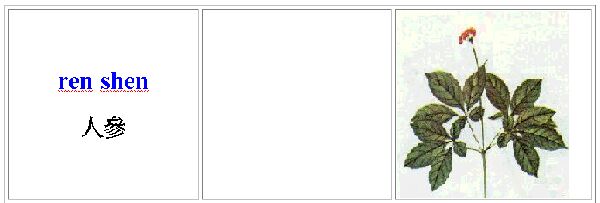
By: Joe Hing Kwok Chu Japanese Pronunciation: ninjin; Korean pronunciation: insam; Cantonese Pronunciation: jensam Pharmaceutical name: Radix Ginseng Latin botanical name: Panax ginseng C. A. Mey Common Name: ginseng root Characteristics and channel (meridian) relation: smells aromatic, tastes sweet and slightly warm. Related to spleen and lung channels. Chemical ingredients: (1) Saponins ginsenoside Rc, Ra1[7-9], Ra2[7-9],Ra3[10-11], Rba, Rb2,Rc, Rd; Rg3[10-11], Rg3[12], notoginsenoside R4[9], chikusetsuaponin IV, IVa (2) Vaporizing oil panaxynol, ginsenyne, alpha pansinsene, beta pansinsene, beta farnesene, bicyclogermacrene, beta elemene, gama elemene, alpha neodovene, beta neodovene, alpha humulene, beta humulene, caryophyllene, beta gurjunene, alpha gurjunene, alpha selinene, beta selinene, gama selinene, selin-4, alpha guaiene, gama cubebene, beta patchoulene, hepatadecanol-1, octanal, gama cadinene, trans beta farnesene, beta guaiene, beta maaliene, cis caryophyllene,delta elemene, tetradecane, pentadecane, hexdecan, ;2,6-ditertbutyl-4methly-phenol, heptadecane, delta cadinene,widdrol, beta bisablene, octadecane, abol, alpha elemene, tridecan, eremophifene, gam patchoulene, cedrol, gama gurjunene, dodecane, alloaromadendrene, trans-caryophyllene, eicosane, alpha santalene, alpha muurodlene, palustalol, beta demene, alpha santalol, beta eubesmol, di-n-butyloxalate, eleutherosides. (3) Organic acid and ester citric acid, isocitric acid, fumaric acid, oleic acid, linoleic acid, cis-butendicarboxylic acid, malic acid, pyuvic acid, succinic acid, tartaric acid, panax aid, salicyclic acid, vanillic acid, p-hydroxycinnamic acid, triglyceride, plmitin, palmitic acid. (4) Sterols Beta sitosterol, stigmasterol, daucosterol, sitosteryl-o-(6-O-fatty acyl)-glucpyranoside. (5) Nitrogen compounds choline, adenosine triphosphate, adenosine and other amino acids. (6) Vitamins B1, B2, B12, C, nicotinic acid, folic acid, biotin (7) Enzymes (8) Trace minerals copper, zinc, iron, manganese and others (more than 20). (9) Gomisin N and gomisin A. (10) Kaempferol and pansenoside. (11) Sugars Fructose, glucose, arabinose, rhamnose, glucuronic acid, mannose, xylose, sucrose, maltose, raffinose, ginsengtrisaccharide A, B, C, D; maltol, nonacosane, methoxy-5, nephyl-2(5H)-furanone. Medical Functions: 1. Regulates central nervous system. 2. Regulates circulatory system: small amount: stimulates, large amount: suppresses; small amount: improves memory; prevents platelet coagulation; 3. Improves immune system 4. Anti Cancer 5. Anti aging 6. Anti stress 7. Prevents morphine from becoming habit-forming 8. Improves condition of diabetic patients Toxicity and Side Effects Side effects include: 1. Emotion : causing headaches, insomnia, anxiety.(2,3,4) 2. Circulatory system: pale face, purple lips, spastic limbs, elevated blood pressure, rapid respiration, even exhaustion and death. (2,3,4) 3. Other side effects: hiccups, itchy skin. (2) Generally, the natural saponins are highly toxic. The toxicity of saponin of ginseng is relatively mild. Oral dosage of 100ml of 3% ginseng tincture may cause anxiety and over-stimulation. Oral dosage of 200ml may cause allergic reactions of rash, itchiness, dizziness, headache, rising of body temperature and bleeding. There is a report of death after orally taking 500ml. (1) Eleutherosides of ginseng are related to digitalis glycosides, such as digoxin, and may have an additive effect with digoxin. The concurrent use of digitalis glycosides and ren shen (ginseng) may increase serum levels of digoxin and possible digitalis glycoside toxicity. Sample of formulae: Ren Shen Bai Du San, Xiao Chai Hu Tang, Ban Xia Xie Xin Tang, Du Huo Ji Sheng Tang, Li Zhong Wan, Wu Zhu Yu Tang, Si Jun Zi Tang, Bu Zhong Yi Qi Tang, Shi Quan Da Bu Tang, Gui Pi Tang, Sheng Mai San, Ju Pi Zhu Ru Tang, Wen Jing Tang, Tian Wan Bu Xin Dan Price and Quality Wild ginseng roots cost much more than cultivated roots. There is no fixed market price for good quality wild roots. Usually dealers charge what the market will bear. Chinese Manchuria wild ginseng roots fetch the highest prices in the retail market. A root of about 50 grams (a little less than two American ounces) can sell for US $15,000. Usually the age, fragrance and look of the root, the market supplies, urgency of the buyers and the willingness of the sellers determined the price. Top quality American wild ginseng roots can fetch 600 to 900 dollars a pound. Cultivated American roots sell for US $60 to about US $120 a pound. Price fluctuation is determined more by supply. Usually the demand for the cheaper quality roots is more elastic and the demand for the higher quality roots is more inelastic. Wild ginseng roots usually do not have symmetrical shapes and are much denser than cultivated ones. The wild roots are not even and most of the time are not straight because they have to struggle through the uneven soil in the wild. Cultivated roots are more symmetrical and straighter and much softer than the wild roots. The ring marks are not as dense as those of the wild roots and the roots are less fragrant. Wild roots have more small, thin, hair-like whiskers growing out from the main roots for seeking water and nutrients in the wild. The cultivated roots have very little of those because they are watered and fertilized by farmers. The author was told by a friend who worked for an herb importing company that some crooks in Hong Kong buy American wild ginseng roots, trim off the "whiskers", and re-attach them to the cultivated Chinese or Korean ginseng roots to make them look wild before shipping them to Europe and selling them as such. When the unwary buyers cook the roots in water, all the whiskers fall off. (In Cantonese slang, one's phony whiskers falling off means losing one's dignity, because the Chinese revere older people.) Ginseng is sold in powder form, in capsules, and in extract. Usually the better quality ginseng roots are sold in root form. It is just like better cuts of beef, tenderloin or filet mignon, which are not made into hamburger. Adulteration: Since ginseng is expense and difficult to produce, adulteration or substitution with cheaper products is very common in packaged ginseng products. Some manufactured "ginseng" products contain Mandragora officinarum (mandrake, a poisonous narcotic) with hyoscine bromide, rauwolfia alkaloids with the hypertensive drug reserpine, cola with caffeine, phenylbutazone (a carcinogen), and aminopyrine. An independent test commissioned by the health food trade journal “Whole Foods” found that 60 percent of ginseng products are worthless because they contained too little of the herb to have any biological effect. Twenty-five percent contained no ginseng at all. |